Written by Matt Potter,
Brightside Health
3 Minute Read

Medically reviewed by:
Erin O'Callaghan, PHD
Director of Therapy
10 Minute Read
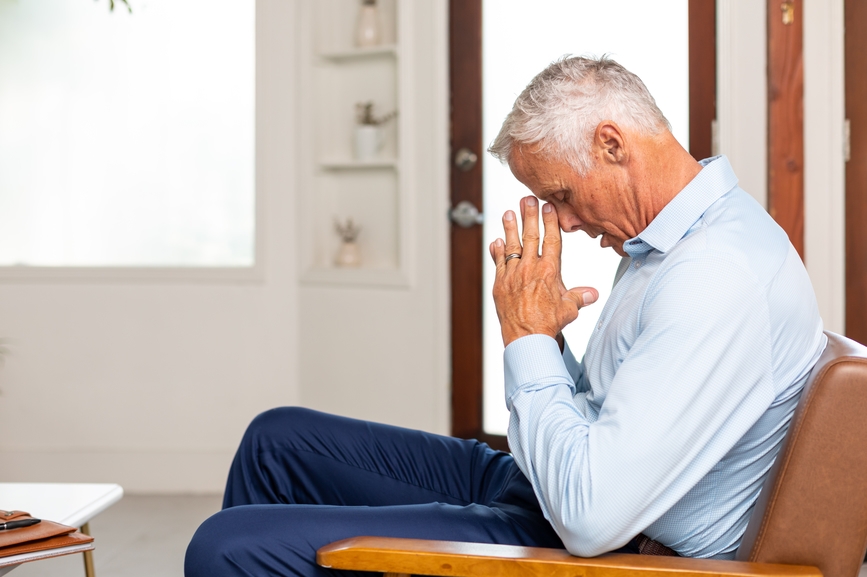
If you’ve ever had a drink to “wind down” before bed, you’re not alone. Alcohol is often seen as a shortcut to relaxation and sleep. But while it might help you fall asleep faster, it can quietly disrupt the quality of your sleep—and leave you feeling more tired, anxious, or foggy the next day. Understanding how alcohol affects sleep is an important first step toward feeling more rested, balanced, and resilient.
How Alcohol Affects Sleep
Alcohol is a sedative, not a true sleep aid. Here’s what happens in the brain and body when you drink alcohol before sleep:
- Disrupts Your Sleep Cycles
Healthy sleep moves through multiple stages, including deep sleep and REM (rapid eye movement) sleep—both essential for memory, mood regulation, and emotional processing. Alcohol reduces REM sleep and fragments deep sleep, leading to lighter, less restorative rest. - Increases Nighttime Awakenings
As alcohol is metabolized (usually in the second half of the night), it has a rebound effect that can cause frequent waking, racing thoughts, or early-morning insomnia. - Worsens Snoring & Sleep Apnea
Alcohol relaxes throat muscles, increasing the risk of snoring and breathing disruptions, especially in people with sleep apnea. - Impacts Mood & Anxiety the Next Day
Alcohol-related sleep disruption can heighten irritability, anxiety, low mood, and stress sensitivity, making it more likely to reach for alcohol again to relax—perpetuating the cycle.
The Sleep–Alcohol Cycle
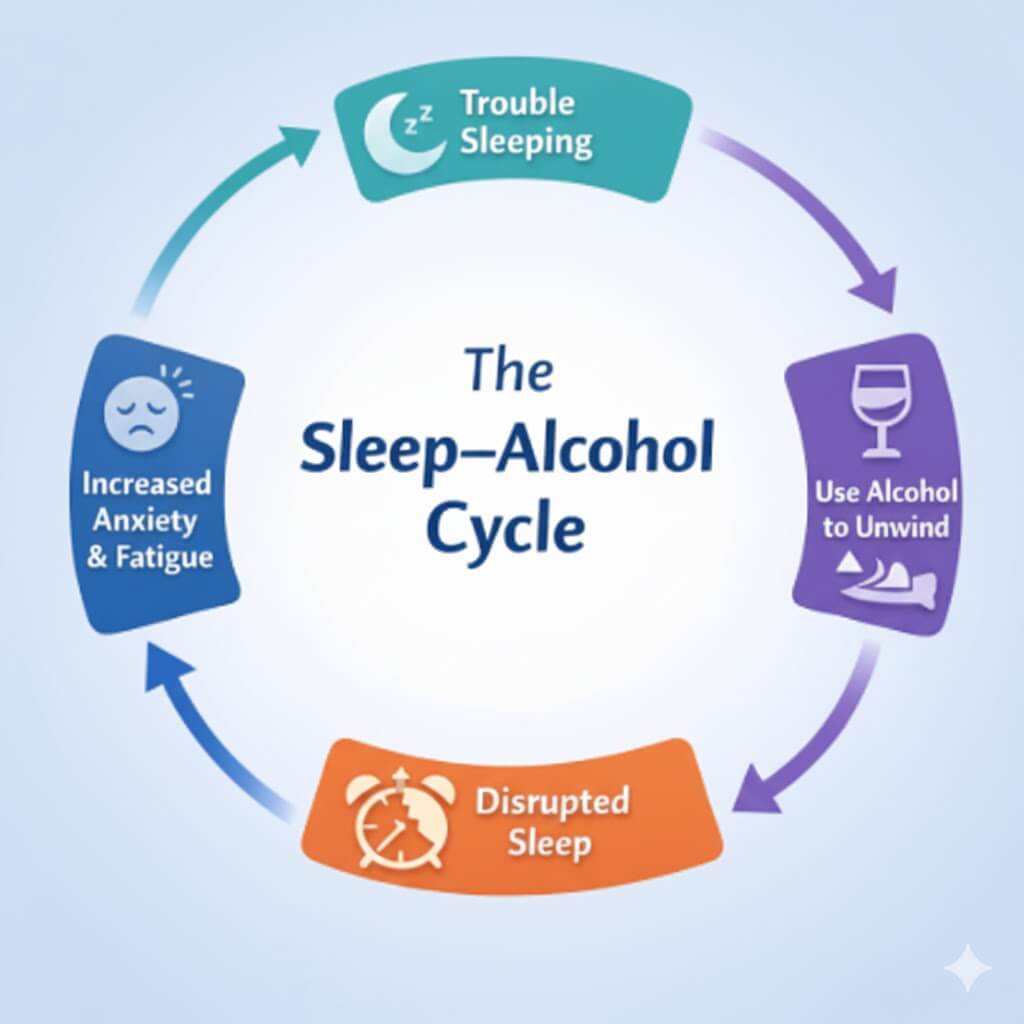
This cycle is common—and it’s not a personal failure. It’s a biological response. The good news? Small changes can make a meaningful difference.
Sleep Hygiene Tips
Improving sleep doesn’t require perfection. Consistency matters more than doing everything “right.”
🌙 Create a Wind-Down Routine
- Aim for 30–60 minutes of screen-free time before bed
- Try calming activities: reading, stretching, gentle breathing, listening to calming music, or a warm shower
🕰 Keep a Steady Schedule
- Go to bed and wake up at roughly the same time—even on weekends
- This helps regulate your internal clock
🛏 Optimize Your Sleep Environment
- Cool, dark, and quiet rooms promote deeper sleep
- Consider blackout curtains, white noise, or a fan
☕ Pay attention to Late-Day Food & Drinks
- Avoid caffeine after early afternoon
- Be mindful of late-night sugar or heavy meals
Benefits of Reducing or Eliminating Alcohol for Sleep
Many people are surprised by how quickly sleep improves when alcohol is reduced—even before other habits change.
You may notice:
- Falling asleep more naturally
- Fewer nighttime awakenings
- Deeper, more restorative sleep
- Improved mood and focus
- Less anxiety
- More energy during the day
You Don’t Have to Figure This Out Alone
If sleep problems, stress, anxiety, low mood, or alcohol use are starting to feel connected—or harder to manage on your own—support can make a real difference.
At Brightside Health, our licensed clinicians use evidence-based care to help you improve sleep, address anxiety or depression, and change unhelpful patterns around alcohol—at a pace that feels right for you. Care is personalized, compassionate, and accessible from home.
Whether you’re looking for tools to sleep better, support for reducing alcohol use, or help navigating stress and mood changes, we’re here to help.
Learn more or get started with care at Brightside Health today.